THE DOOR CARE JOURNAL
A Practical Commercial Door Maintenance Checklist
A safe planning checklist for Toronto facility managers: what to observe, what to record and how to prepare for a commercial door service visit
Originally published Sep 10, 2026. Updated with additional planning guidance.
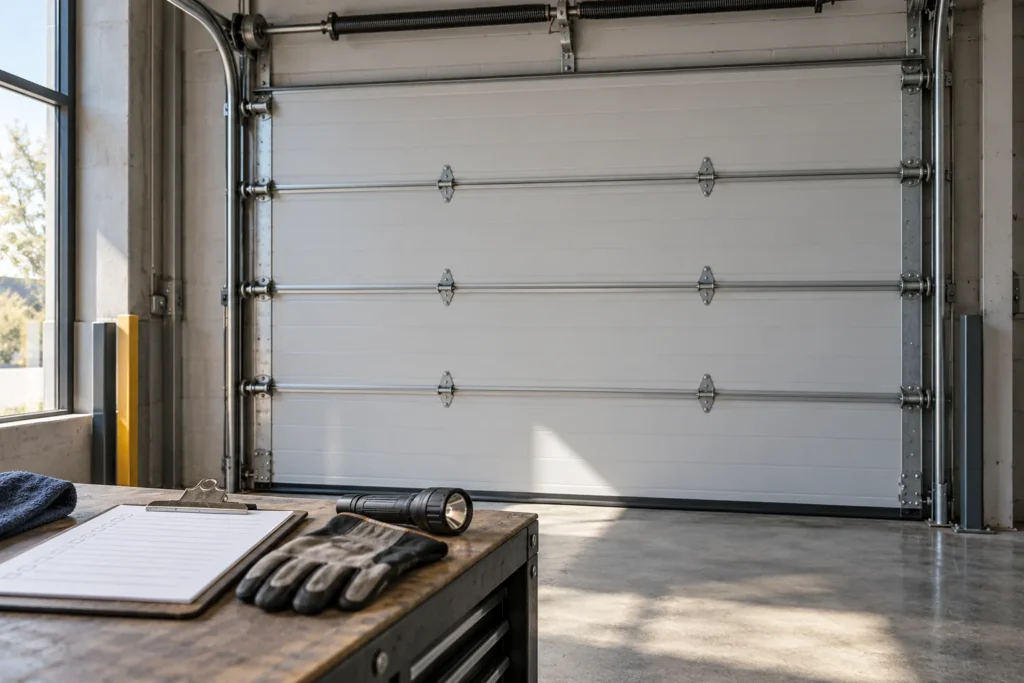
A commercial door maintenance plan helps Toronto property managers organise observations, records and service requests. This guide focuses on safe preparation and planning. It does not provide instructions for spring adjustment, cable replacement, electrical work or other hazardous repairs.
Start with an operating record
A maintenance plan is more useful when it begins with how the opening is used. Write down the door type, the opening it serves and the normal traffic pattern. A warehouse receiving bay, an auto service entrance and a storage door may look similar from outside but have different operating demands. Include busy periods, exposure to weather and whether staff share the controls across several shifts.
Record the door’s role in your facility
Keep the record available to the person coordinating service. Equipment labels, existing manuals and earlier work orders can help establish the correct system. Do not remove covers or enter a restricted area to collect details. Information available from a safe position is enough for an initial request. A clear record reduces avoidable confusion when different people report the same issue.
Observe changes without touching moving parts
A facility team can report symptoms without diagnosing or handling a dangerous component. Listen for a new sound from a safe location, note whether movement seems smooth and record whether the door completes its usual cycle. Describe what changed rather than naming a part that has not been inspected. “Stops halfway after the first morning opening” is more useful than a guess about a motor or spring.
Separate observation from repair
Avoid repeated operation to test a fault. A door that moves unevenly, has an obviously damaged cable or appears unstable should be taken out of use. Keep people and vehicles clear of the opening and follow the property’s process for isolating unsafe equipment. Do not stand beneath a raised door or attempt to hold it open by improvised means.
Look at the opening and its surroundings
Door condition and the surrounding activity belong in the same maintenance conversation. Observe whether pallets, bins or delivery equipment are routinely left near the opening. Identify routes where vehicles can strike the lower sections, side guides or controls. A recurring obstruction may explain an operating complaint that otherwise appears intermittent. Report these conditions alongside the door symptoms.
Include traffic and impact risks
The goal is to improve the information available for the assessment, not to change the installation yourself. Relocating a control, altering a safety device or modifying the opening is work that needs an appropriate plan. Where impact damage is suspected, preserve the incident details and avoid straightening or forcing components. Small visible damage can be associated with a larger alignment issue.
Plan around Toronto weather
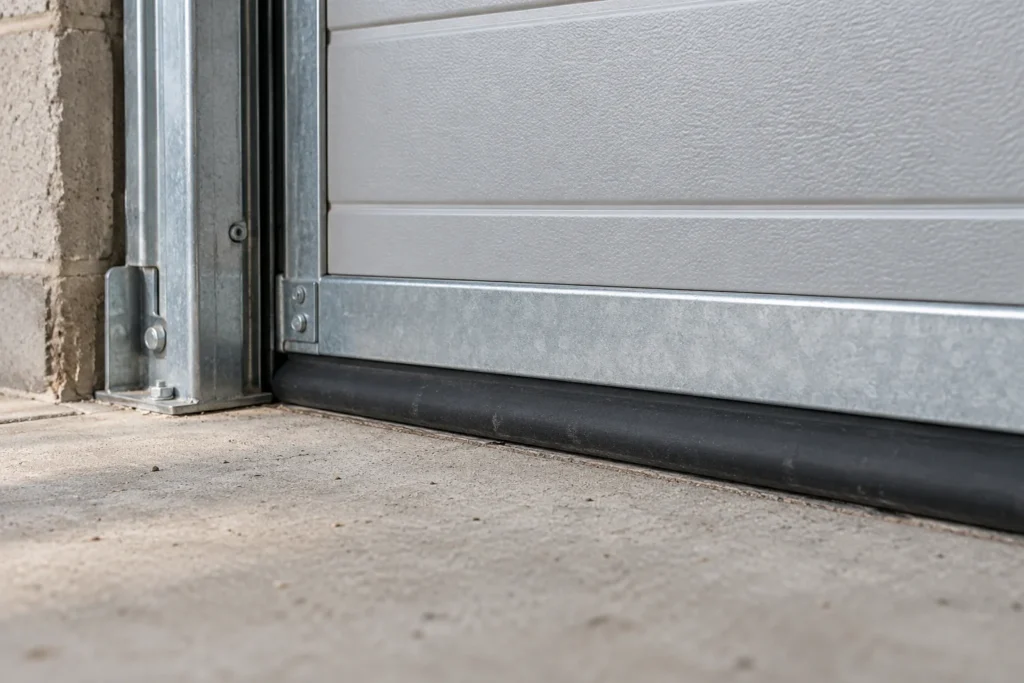
In Toronto, a commercial opening may be exposed to cold conditions, wind-driven moisture and tracked-in debris. Note whether the issue happens only at certain times or after particular weather conditions. A seal that looks worn, gaps around the closed door or changes in normal travel can all be useful observations. Do not assume that the weather is the only cause of a new fault.
Note exposure and seasonal patterns
Record conditions as context for professional assessment. Avoid using heat sources, improvised de-icing methods or force on a stuck door. The door manufacturer’s operating guidance remains the reference for the specific system. When planning seasonal service, discuss your equipment, exposure and usage rather than relying on a universal schedule that cannot account for the property.
Information to collect before a visit
- Door location and type, as recorded by the facility.
- Description of the symptom and when it occurs.
- Contact person, operating hours and safe access requirements.
- Existing manuals, service records and safely obtained photos.
| Observation | Record | Next step |
|---|---|---|
| New operating noise | When it occurs and where it is heard | Request assessment without repeated testing |
| Visible damage | Door location and safe-distance photos | Keep the area clear and discuss service |
| Worn perimeter seal | Location of the visible gap | Discuss seal condition during maintenance |
Discuss the scope of a maintenance visit
Preventive maintenance is a scope of work, not a promise that every future breakdown will be avoided. Ask which door components and operating checks are included, whether safety devices form part of the assessment and how findings will be documented. The provider should be able to explain the agreed scope and identify any work that needs separate authorisation.
Ask what is included
A maintenance visit may identify worn parts, damage or an installation issue that is outside routine adjustment. Ask what the finding means for operation and whether the door should stay out of use until corrective work is completed. Keep the recommendations with your service record. Clear documentation is particularly useful when property managers, occupants and maintenance coordinators share responsibility for an opening.
Use a simple symptom checklist
A short reporting checklist helps prevent vague messages from being passed between teams. Use the same fields for the door location, time, operating conditions, visible symptom and action already taken. Staff should know how to report an unsafe door and whom to contact at the property. The checklist should support a service request rather than encourage hands-on diagnosis.
Make reports consistent across shifts
Compare recent reports with the existing record. A symptom that appears on several shifts may warrant a different assessment from a single event involving an obstruction. Do not erase an earlier issue because the door later moved normally. Intermittent behaviour is still useful information. A professional can decide how the pattern relates to the equipment after the relevant details are reviewed.
Compare repair and replacement thoughtfully
When a door repeatedly needs attention, review the whole situation before deciding on another component replacement. The age of the assembly, visible damage, operating requirements and availability of compatible parts may all affect the discussion. A larger repair can make sense for one opening while a replacement plan may be worth exploring for another. A quote should explain the actual proposed work.
Consider the complete system
Avoid comparing prices without comparing scopes. Ask whether the proposal includes the door assembly, operating equipment, disposal, access arrangements and any separate work the building requires. Do not rely on an assumed service life or a claimed saving that has not been supported for your property. The purpose is a clear, informed decision for the specific door and facility.
Schedule service around facility operations
The most useful maintenance plan includes practical arrangements for the property. Identify the site contact, the opening location and the times when receiving traffic is busiest. Explain check-in procedures and any rules that affect access. If the opening needs to be taken out of use, discuss the impact on deliveries and coordinate with the team responsible for the building.
Coordinate access before the visit
Keep alternative routes and operational decisions within the property’s own procedures. Do not bypass safety requirements to keep a bay available. A provider may need further details before confirming the visit scope or schedule. The information in this guide is general planning material and cannot establish emergency availability or a specific response time for any service request.
Keep a record after the work
After authorised work, keep a record of the scope, the findings and any recommendations. Ask about operating instructions relevant to the repaired system and where the manufacturer’s documentation can be obtained. The person coordinating the property should know what was completed and whether any additional action is recommended. A maintenance history is more helpful when it describes work accurately.
Follow the equipment guidance
Review the plan when facility usage changes. An opening that begins serving more deliveries, a new vehicle route or a change in the equipment can affect the maintenance conversation. Staff training and clear reporting remain valuable between visits. A brief routine for noting symptoms does not replace professional inspection, but it gives the next assessment a better starting point.
Arrange the next step for your Toronto property
Explore preventive door maintenance and commercial overhead door repair to understand the service categories. Read our warehouse wear guide and winter preparation guide for related planning information. Our maintenance articles and preventive maintenance topic provide further context.
To discuss professional service for your property, explore Preventive Door Maintenance or Commercial Door Spring Replacement and share the door details with MS DOOR SYSTEMS.
For equipment issues at a receiving bay, explore our Loading Dock Repair service and describe whether the fault affects the dock leveller, bay door or surrounding equipment.
Frequently asked questions
Can this guide diagnose a door fault?
No. It helps you describe observations and prepare for a professional assessment. The equipment and site conditions must be considered.
What should I do if the door appears unsafe?
Stop using it, keep people and vehicles clear, and follow the property’s reporting procedure to arrange professional assessment.
How do I request service in Toronto?
Use the contact form with your door type, property location, symptoms and contact details. Availability and scope can then be discussed.

Commercial door guidance on maintenance planning and service records
Door Care Journal