THE DOOR CARE JOURNAL
When a Commercial Door Opener Stops Responding
Prepare a clear service request for an unresponsive opener without attempting electrical or mechanical repairs
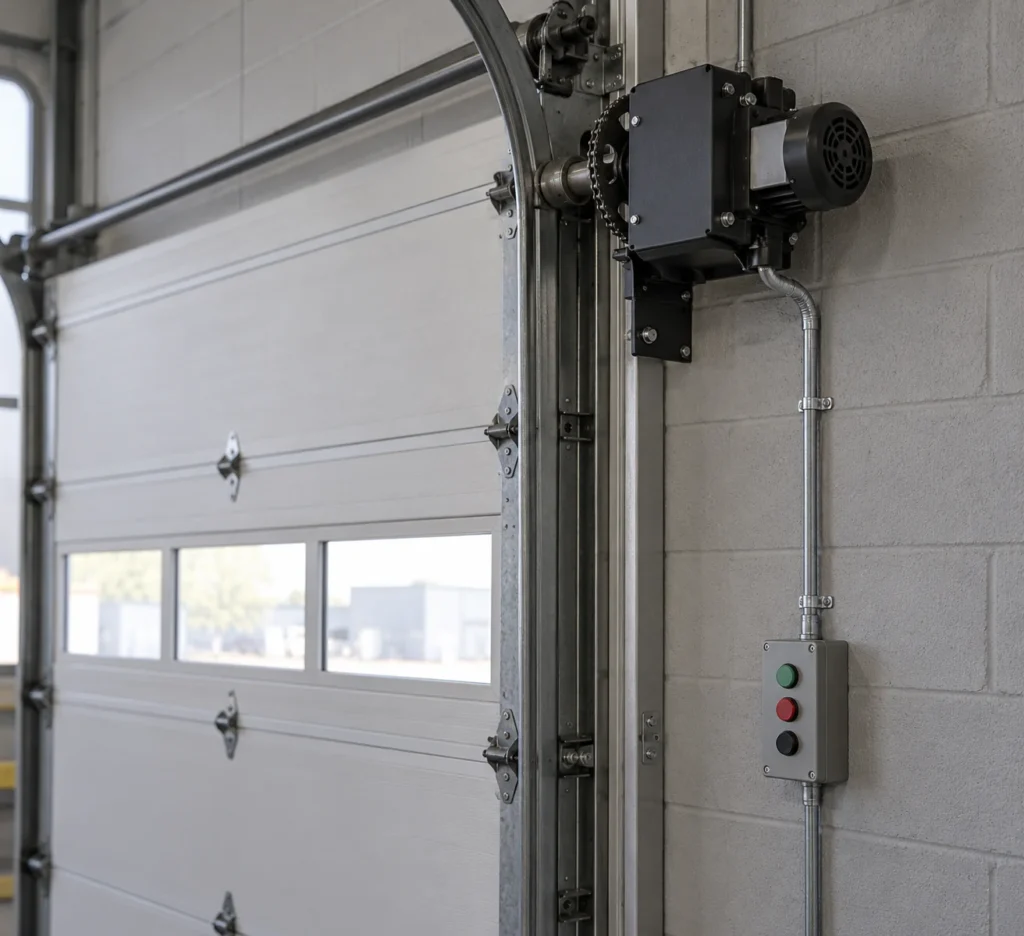
This guide helps Toronto property managers collect useful information for a commercial door service request. It provides general planning guidance and does not replace an on-site assessment or equipment instructions.
Describe the response at the control
If a commercial door opener stops responding, describe what happens during normal attempted use: no response, intermittent action or a stop during travel. Do not continue operating a door that appears unsafe. Record the door location and which approved control was used so the service request is specific.
Consider the complete system
An opener complaint is not always limited to the motor. Door movement, controls and safety devices interact. A professional assessment can consider the system and decide what requires attention. Do not bypass a sensor, alter controls or adjust loaded components in an attempt to isolate the cause.
Keep staff and traffic clear
Follow the property’s process for an unavailable opening. Keep people and vehicles away from a door that could move unexpectedly. Avoid improvised methods of holding or moving the door. If access is essential to the operation, discuss that need when requesting service so the assessment can be planned appropriately.
Prepare useful service information
Include the equipment label if it can be read safely, the symptom, when it began and relevant earlier work. Explain site access and operating hours. Photos from a safe distance can add context. Do not remove electrical covers or enter restricted spaces to gather details for the request.
Review the proposed repair
Ask what the assessment found and which work is proposed. Compatibility between the operator and door matters when replacement equipment is discussed. Review the scope before authorisation and keep the resulting record. Refer to the manufacturer’s instructions for operation of the installed system.
Before you send a request
- Identify the door and Toronto property location.
- Describe the symptom and its timing.
- Include safe access requirements and the site contact.
- Keep people clear if the opening appears unsafe.
| Information | Why it helps |
|---|---|
| Door type | Provides context for the assessment |
| Operating symptom | Explains what changed |
| Site access | Supports practical planning |
Explore commercial door services and our maintenance checklist. To discuss the next step, send a service request.
To discuss professional service for your property, explore Commercial Door Opener Repair or Commercial Overhead Door Repair and share the door details with MS DOOR SYSTEMS.
Frequently asked questions
Can this guide diagnose a door fault?
No. It helps you describe observations and prepare for a professional assessment. The equipment and site conditions must be considered.
What should I do if the door appears unsafe?
Stop using it, keep people and vehicles clear, and follow the property’s reporting procedure to arrange professional assessment.
How do I request service in Toronto?
Use the contact form with your door type, property location, symptoms and contact details. Availability and scope can then be discussed.

Commercial door guidance on operator symptoms and service preparation
Door Care Journal